
What Probate Covers in Dewey County
Probate is how the court oversees a deceased person's property and debts. The estate is opened, claims are paid, and what is left passes to the right heirs. In Dewey County this work happens inside the District Court. There is no standalone probate court in Oklahoma. The probate division of the District Court hears these matters, and the Court Clerk keeps the files.
The reach of a probate case is wider than many people expect. It covers estates left by a will and estates left without one. It also covers guardianships of minors and adults, conservatorships over property, the filing of wills for safekeeping, and certain trust matters. Some of these touch sensitive subjects like a child's care or an adult's mental capacity, so not every page in the file is open.
When someone dies owning property in the county, the case lands here. The same is true when a family asks the court to protect a minor or an incapacitated adult. Each filing builds a record that the public can usually inspect.
Probate Terms Defined
Probate paperwork is full of legal words. A short glossary makes a Dewey County probate records search easier to follow. These terms show up in petitions, orders, and the OSCN docket itself.
- Testator
- The person who made the will. The will speaks for the testator after death.
- Executor
- The person named in a will to carry out its terms and settle the estate.
- Administrator
- The person the court appoints to settle an estate when there is no will or no named executor.
- Personal representative
- The general term for an executor or administrator who manages the estate under court supervision.
- Intestate
- Dying without a valid will. State law then decides who inherits.
- Guardianship
- A court arrangement that gives one person legal authority over the care of a minor or an incapacitated adult.
- Conservatorship
- A court arrangement focused on managing the property or finances of a person who cannot do so alone.
How to Search Dewey County Probate Records
Two free statewide sites carry Dewey County District Court dockets. The first is the Oklahoma State Courts Network, known as OSCN. The second is On Demand Court Records, known as ODCR. Both let you pick Dewey County and look up a probate case by number or by name. OSCN is the official judiciary network, so start there when you can.
The docket shows filings, hearing dates, and orders. Some documents are scanned and posted, while others are marked as available only at the Court Clerk's office. When that happens, or when the case is old, you call the clerk. The OSCN advanced search page also lets you filter by party type, including Personal Representative, Heir, and Guardian, which helps when you do not have a case number.
- Open OSCN, then choose Dewey County District Court from the court list.
- Enter the case number if you have it, using the year and number format the site shows.
- If you have no number, search by the decedent, party, or personal representative name.
- Open the matching case to read the docket, parties, events, and any posted documents.
- For files marked clerk-only, older estates, or certified copies, call the Court Clerk at (580) 328-5521.
Note: The public docket warns that its data is not the official record, so verify any detail with the Dewey County Court Clerk before relying on it.
The Probate Division and Court Clerk
All Dewey County probate cases are filed at the courthouse in Taloga, the county seat. The Oklahoma Historical Society notes that the county was renamed from "D County" in the November 1898 election and that the current courthouse dates to the mid-1920s. You can read the county's Oklahoma Historical Society entry for that background.
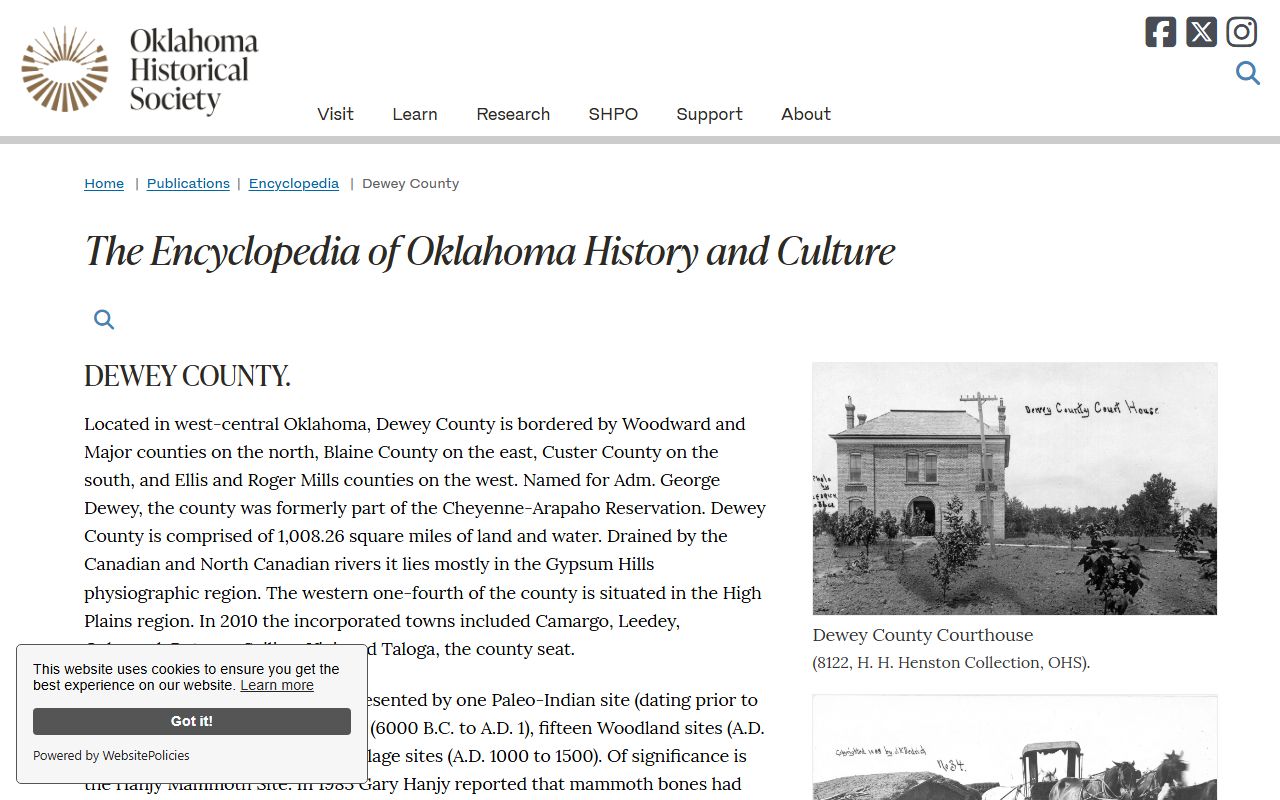
That history matters for older estates. Pre-digital probate files may sit in the vault rather than online. The Court Clerk is the office that pulls them, issues certified copies, and accepts wills filed for safekeeping. The cards below give the working contacts for a probate matter.
Dewey County District Court
216 Broadway Street
Taloga, OK 73667
(580) 328-5521
Broadway and Ruble Street area
Dewey County Court Clerk
Rachelle Rogers, Court Clerk
Ruble Ave / P.O. Box 278
Taloga, OK 73667
(580) 328-5521
Fax (580) 328-5658
Probate Case Types in Dewey County
OSCN and ODCR sort cases by type, and several of those types are probate matters. Picking the right type narrows a search fast. The District Court case-type list for Dewey County includes the categories below.
- Probate, the main estate administration case type.
- Probate Miscellaneous Proceedings, used for related estate filings.
- Filing of Wills, for wills lodged with the court.
- Trusts, for matters that involve a trust.
- Guardianship categories, for minors and incapacitated adults.
Each type carries its own prefix on the docket. Probate cases often appear under the PB code, while guardianship and trust matters use related labels. If you are unsure which type fits, search by name and let the results show the type.
What Dewey County Probate Records Show
A probate file grows as the case moves. Early filings open the estate, middle filings track the assets and debts, and final filings close it. The table maps the common documents to what each one tells you.
| Document | What It Shows |
|---|---|
| Application or petition | Who asked the court to open the estate or guardianship and why. |
| Will and order admitting it | The decedent's wishes and the court's finding that the will is valid. |
| Letters testamentary or administration | Proof the court appointed a personal representative to act. |
| Inventory and appraisal | The estate's assets and their value at the time of death. |
| Creditor notices and claims | Debts presented against the estate and how they were handled. |
| Accounting and final decree | The final money summary and the order distributing what remains. |
Guardianship files add their own pages, such as reports on the ward and orders setting the guardian's duties. Some of those reports are sealed. Estate sales of real property also create confirmation orders, which can matter to buyers and heirs alike.
Note: Even when a case is public, the online docket may not include every scanned page, so the full file at the Court Clerk's office can hold more than the website shows.
Recorded Probate Documents Online
People often mix up two different record systems. The court docket on OSCN and ODCR is one thing. Recorded land instruments are another. When a probate transfers real estate, the resulting deed or decree may also be recorded with the County Clerk. That recorded copy is searchable on a separate land-record portal.
The statewide portal for those recorded documents is OKCountyRecords, which hosts the Dewey County land records. Indexed data there begins in March 2000, and scanned images go back to September 1998. It is the right place for probate-related recorded instruments, but it is not the main probate docket source.
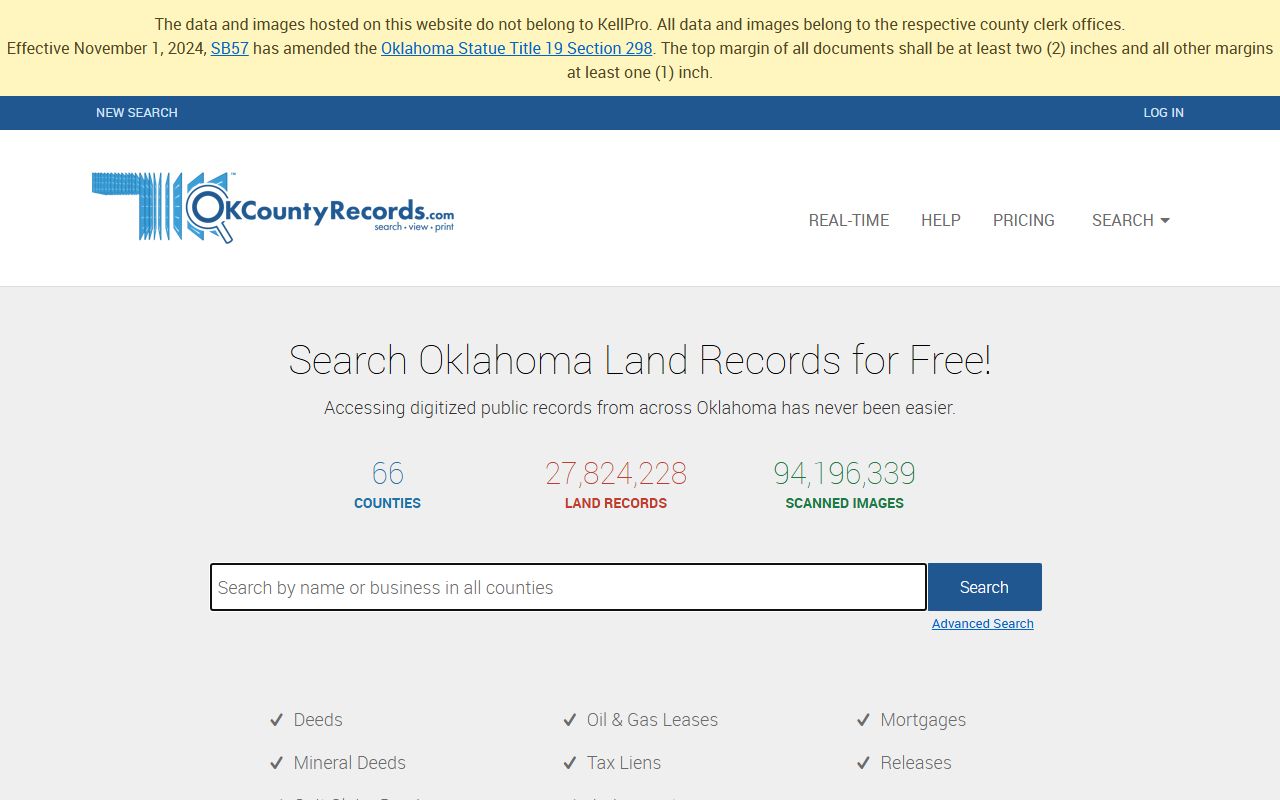
Use the land portal to confirm a recorded transfer or to find a probate decree affecting title. Use OSCN or ODCR for the live case docket. The two together give the full picture of a Dewey County probate.
How Probate Works in Dewey County
The path of a probate case follows a clear order. Most estates move through the same stages, though contests, real-estate sales, and tax issues can stretch the timeline. The steps below trace a typical Dewey County estate from start to close.
- A petitioner files a probate or administration application in Dewey County District Court.
- The court sets hearing dates and the notice requirements for heirs and creditors.
- If a will is admitted or administration is opened, the court appoints a personal representative.
- The representative gives notices, inventories the assets, handles creditor claims, and seeks court approval for actions that need it.
- The estate closes with an accounting, a distribution, and a final order or decree.
State rules drive each step. Oklahoma probate procedure is set out in Title 58 of the Oklahoma Statutes. A divorce or marriage in the family can affect who inherits, and those related files are covered on the Dewey County marriage and divorce records page.
Probate Filing Fees in Dewey County
Filing a probate case costs money, and so does each certified copy. A current Dewey County probate fee schedule was not published in the official sources reviewed for this page. Rather than guess at amounts, the safe move is to ask the office that sets them.
Confirm probate fees with the Court Clerk. Dewey County does not post a public probate filing or copy fee list. Call the Court Clerk at (580) 328-5521 for the current cost to open a probate case, request letters testamentary, or obtain certified copies of estate documents.
Fees can change with state law and local cost orders. The clerk can also explain payment methods and what a certified copy requires. For recorded land documents tied to a probate, the County Clerk publishes a separate recording fee schedule through the OKCountyRecords fee page.
Note: Certified copies carry their own per-page charge and are the version courts and banks accept, so order them through the Court Clerk rather than printing an online docket page.
Restricted Probate Records in Dewey County
Most estate dockets are public under the Oklahoma Open Records Act, found at 51 O.S. Section 24A.1 and following. The open-records framework is indexed through the state law library. Probate is not a blanket exception. Still, several categories inside a probate file are closed or trimmed.
Guardianship matters involving minors and incapacitated adults can be confidential or redacted. Mental-health proceedings fall under Title 43A confidentiality rules, set out in the Title 43A statutes. Adoption matters are typically sealed. Court rules also keep some material off the internet, as the Court of Criminal Appeals explains in Rule 2.6, and juvenile records carry their own protections under Title 10A.
Personal data is often masked even in open cases. Social Security numbers, financial account numbers, and minors' names may be redacted. When a probate touches a guardianship of a child or an adult who cannot manage their affairs, expect limits. The Dewey County Court Clerk can tell you whether a specific file is open, redacted, or available only by court order.