
Dewey County Arrest Records and Court Charges
A Dewey County arrest record is the record that an arrest happened. It names the person taken into custody, the arresting officer, and the agency that made the arrest. The booking side of that event sits with the jail, not the court. A court charge record is a different thing. It holds the formal charges a prosecutor files once the case reaches the District Court. The arrest starts the clock. The charge record is what the court tracks, from the first filing to the final order.
Dewey County does not run a separate arrest database. Arrest details sit inside the criminal case docket and in the arresting officer and agency fields the clerk enters. For booking detail and current jail custody, the county inmate records page covers that side. The court charges after arrest are what this page tracks. The full case file, with pleas, disposition, and sentencing, lives on the criminal court records page.
Find Dewey County Arrest Records
Charges show up where the case is filed. In Dewey County that means the District Court docket, carried by two free public systems. The Oklahoma State Courts Network, known as OSCN, is the official statewide site. On Demand Court Records, known as ODCR, is a second portal where Dewey County is selectable. Both let you read the counts, the charge codes, and the current status of each charge.
- Open the OSCN docket search and pick Dewey County District Court.
- Search by the defendant's last and first name, or enter the case number in the CM or CF format.
- Open the case and read the full list of counts.
- Check each count's charge code, severity level, and current status.
ODCR works much the same way once you pick Dewey County on the ODCR search form. Arrest and booking detail will not always appear in full on the docket. For who is in custody right now, the jail is the better channel. A single case file is also not a complete criminal history, and a statewide name search runs through a separate state portal covered further down.
Note: OSCN warns that its public docket is not the official record and should be checked against the Court Clerk's file before you rely on it.
How Dewey County Charges Get Filed
The charge record begins when a prosecutor files a charging document. An arrest alone does not file a charge. After booking, the District Attorney reviews the case and decides what, if anything, to file. Oklahoma uses three main charging documents, and the one used depends on how serious the crime is.
| Complaint | Information | Indictment | |
|---|---|---|---|
| Filed By | Officer / Prosecutor | Prosecutor | Grand Jury |
| Common For | Misdemeanors | Many felonies | Serious felonies |
| Starts | The case | The case | The case |
In most Dewey County misdemeanor and felony cases, the prosecutor files an information. A grand jury indictment is held for the gravest matters. The inspected Dewey misdemeanor file shows a docket line that reads File, Enter, and Record Misdemeanor Information, which is the moment the charge becomes part of the court record.
A probable cause affidavit often rides alongside the charging document. This is a sworn statement that lays out the facts the officer says support the arrest and the charge. On the Dewey docket it appears as its own entry, filed near the information. Reading it next to the counts shows how the arrest and the filed charge line up, and where they may not.
Who Files Dewey County Charges
State charges in Dewey County come from one office. The District Attorney for District 26 files and prosecutes criminal cases for the state. District Attorney Christopher Boring leads that office, which serves Dewey and several nearby counties. The Dewey County branch is in Taloga and can be reached by mail at P.O. Box 276 or by phone at (580) 328-5541. Because the state brings the charge, every criminal docket names the District Attorney as a party.
The state lists each district prosecutor on the Oklahoma District Attorneys directory.
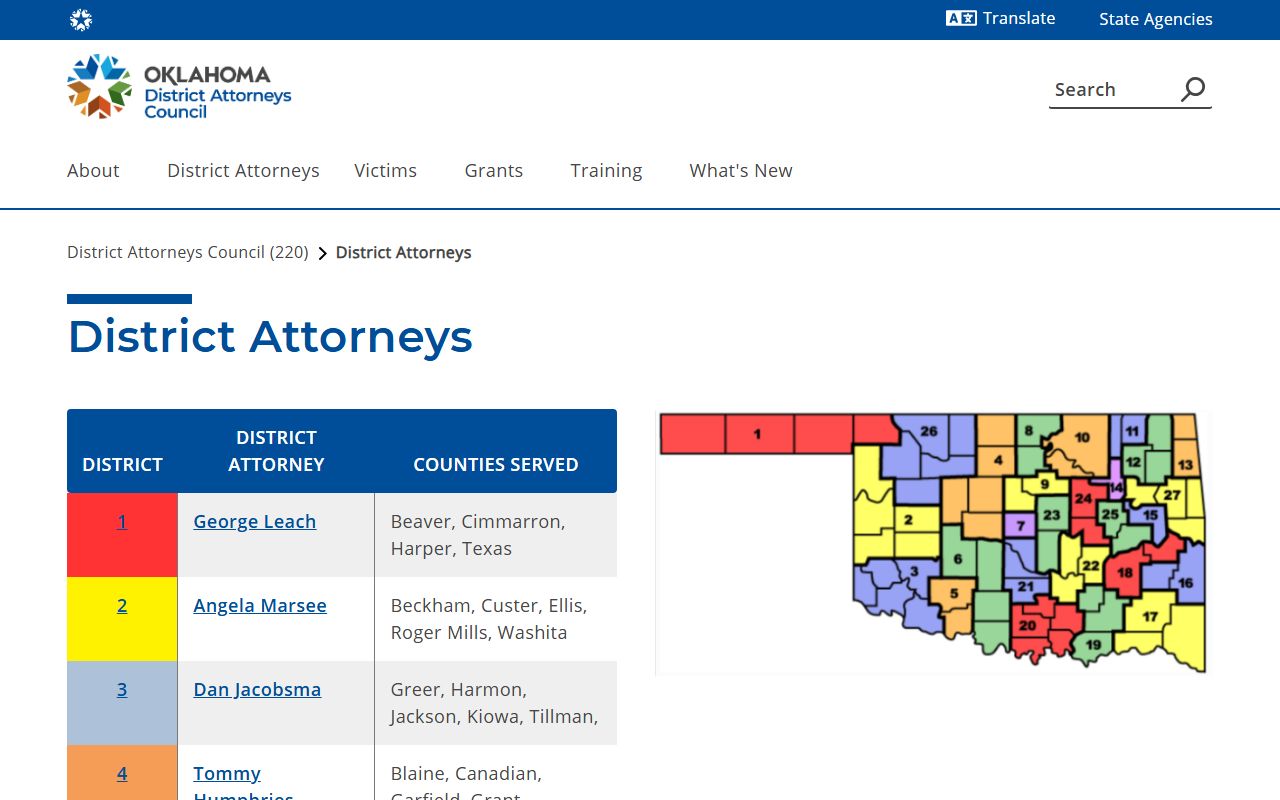
District 26 is the office that decides which charges from a Dewey County arrest actually move forward. A defendant who cannot afford a lawyer may be appointed one through the Oklahoma Indigent Defense System, which covers Dewey from its Woodward regional office.
Charge Status in Dewey County
Charges are not fixed once filed. As a Dewey County case moves, a charge can be amended, reduced, added, dropped, or dismissed. The docket records each change with a dated entry. Reading the current status matters, because an old charge line may no longer reflect where the case stands.
| Status | What It Means |
|---|---|
| Pending | The charge is filed and the case is still open. |
| Amended / Reduced | The charge was changed, often to a lesser offense. |
| Dismissed | The charge was dropped; with prejudice it cannot return, without prejudice it may. |
| Nolle Prosequi | The prosecutor chose not to pursue the charge. |
Each status change leaves a docket line. A motion and order to dismiss, for example, shows the date and the reason the charge ended. The Dewey misdemeanor file records a dismissal with costs, which is a clear case of a charge that closed without a conviction. Watching those entries in order is how you trace a charge from filing to its real result.
Note: Booking charges noted at the jail can differ from the counts a prosecutor later files, so a charge may be added, dropped, or reworded after the arrest.
Dewey County Charge Codes and Severity
Each charge ties to a statute and carries a code. The case-number prefix is the fastest read on what kind of charge it is. A felony, the gravest class, files under the CF prefix. A misdemeanor, a lower-level crime, files under CM. One arrest can produce several separate counts, and a single case can mix charge levels.
- CF
- Criminal felony, the most serious class of charge.
- CM
- Criminal misdemeanor, a lower-level crime.
- TR
- Traffic complaint or citation filed in District Court.
- SW
- Search warrant matter tied to a criminal case.
- YO
- Youthful offender case, often with restricted access.
The count itself is the heart of the charge record. The Dewey misdemeanor file shows a count line such as Petit Larceny, with its status marked right beside it. That pairing of charge plus status is the part most readers need.
Charges vs. Convictions
Being charged is not the same as being convicted. A Dewey County charge record can list counts that were later dropped, dismissed, or beaten at trial. A charge is only an accusation. A conviction is a finding of guilt by plea or verdict. Treating the two as one is a common and costly error.
| Charge | Conviction | |
|---|---|---|
| Stage | Accusation | Verdict or plea |
| Burden of Proof | Probable cause | Beyond a reasonable doubt |
| Who Decides | The District Attorney | Judge or jury |
| Public Record | Yes | Yes |
A clean look at the disposition tells you which one you are reading. A dismissed or pending count carries no finding of guilt, and reading it as a conviction can do real harm to the named person.
Arrest Side of a Dewey Record
The arrest side of the record starts with the agency that made the arrest. In Dewey County that is most often the Sheriff's Office, which also runs the county jail. The county does not host an online arrest log or a public booking roster. Booking charges written up at the jail can differ from the counts a prosecutor later files, so the two should be read together, not as one.
The state's 9-1-1 contact list shows the Dewey County Sheriff's Office phone line.
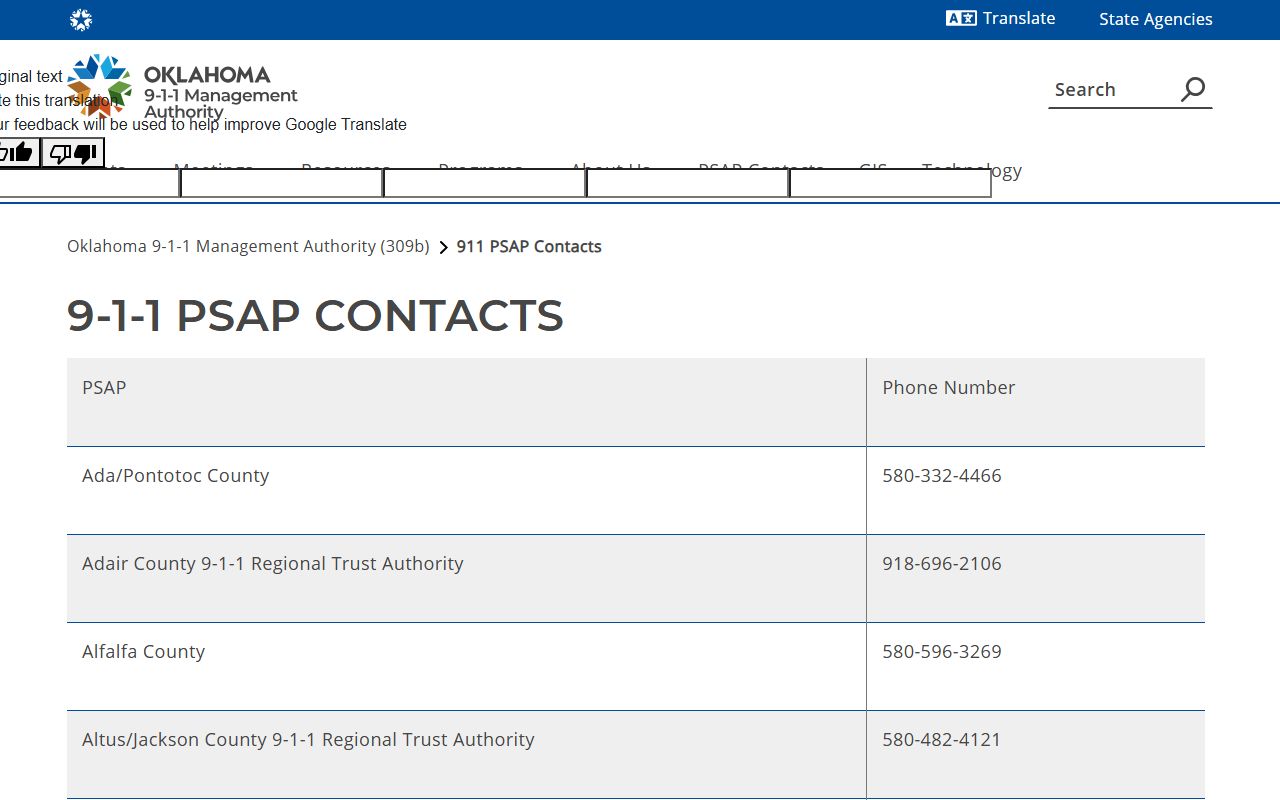
That phone line is the practical way to confirm a recent arrest or current custody when no online roster exists. The arresting officer and agency also appear as party fields inside the court case, which is the only place the arrest detail is reliably searchable. On OSCN, Arresting Officer and Arresting Agency are listed party types, so the docket ties the arrest back to the people who made it.
Not every Dewey County arrest comes from the Sheriff alone. The town of Seiling contracts with the Dewey County Sheriff's Office for law enforcement, so a Seiling case may still route through the county jail and the District Court. Small-town police and the Sheriff can both feed arrests into the same court system, which is why the arresting agency field is worth a close read.
Statewide Dewey County Charge Lookups
A county case file shows one case. It does not show a person's full record across Oklahoma. For a name-based criminal-history search, the Oklahoma State Bureau of Investigation runs the CHIRP portal, a fee-based service. It returns a statewide criminal-history summary built from charge and disposition data reported to the state.
Important: This site is not a consumer reporting agency under the Fair Credit Reporting Act, and its information cannot be used for employment, housing, or credit decisions.
Note: CHIRP is an official criminal-history search, not a live warrant list, and it does not replace the Dewey County court docket.
Restricted Dewey County Charge Records
Not every charge record is open to the public. Oklahoma keeps several categories out of public view. Juvenile and youthful-offender files are largely confidential. Sealed and expunged records drop off the public docket or lose their detail. A full Section 18 expungement can erase an arrest record so it reads as if it never happened, while a 991(c) update changes a deferred case to show dismissed without removing the arrest record. Charges tied to an open investigation may also be withheld until the case is filed.
Key Statutes:
Oklahoma Open Records Act, 51 O.S. § 24A.1 - Most public-body records, including court files, are open unless a statute makes them confidential.
Title 22 of the Oklahoma Statutes - Holds the main expungement and sealing rules for criminal records.
Title 10A juvenile provisions - Make most juvenile court and agency records confidential.
The Court of Criminal Appeals sets which records stay off the internet in Rule 2.6.
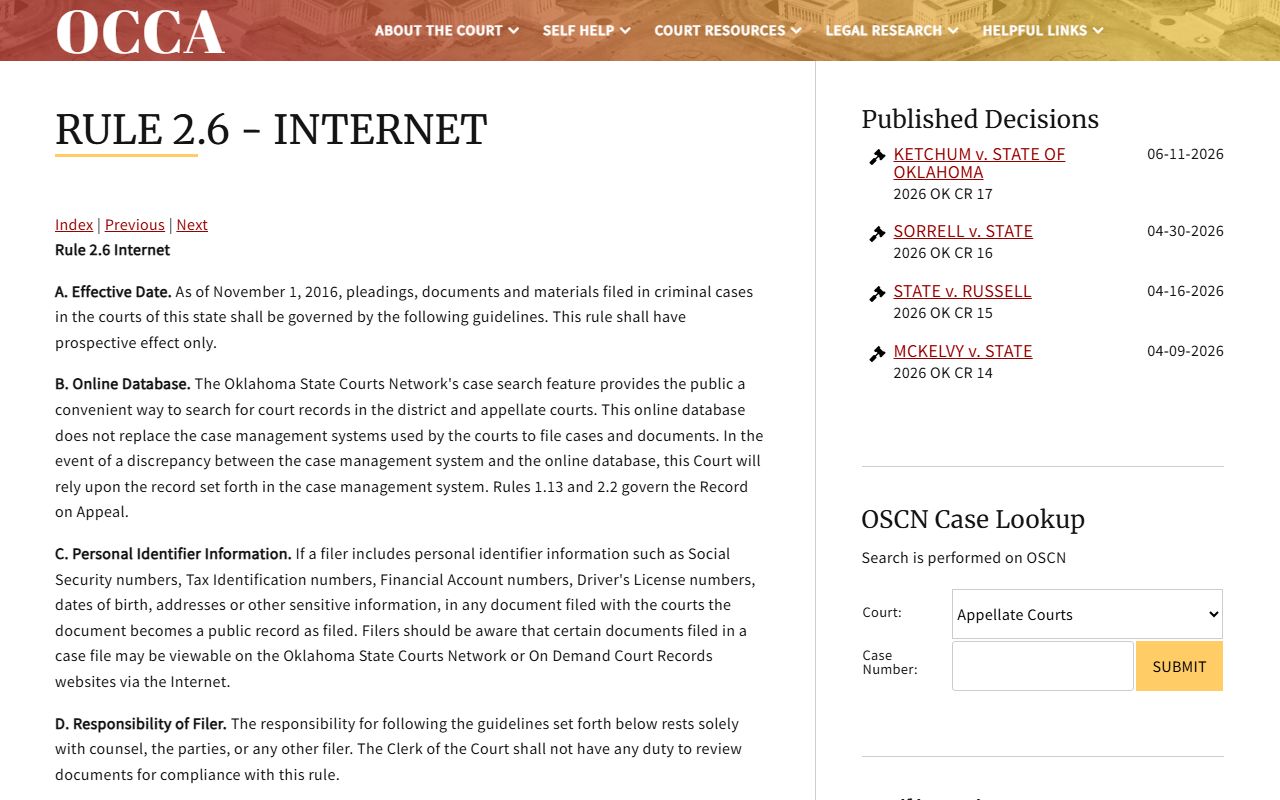
Sealed and juvenile charges from a Dewey County case fall under those internet-posting limits. When a record is clerk-only or missing online, the Court Clerk in Taloga is the office to call for access and certified copies.